


Posts
Enzymes and microbiome: The secret to intestinal health
Enzymes and microbiome: The secret to intestinal health
Why is the intestinal tract the “second brain” of the body?
In the human body, the intestinal tract is not only a place to digest food, but also a center for coordinating overall health. Scientists call the digestive system the “second brain” because it contains more than 100 million neurons, which are closely connected to the brain via the gut-brain axis.

The gut microbiome – made up of trillions of bacteria, fungi and viruses that live in the gut – plays an essential role in:
- Aids in digestion and absorption of nutrients.
- Regulates the immune system.
- Produces hormones, neurotransmitters (such as serotonin – the “happiness hormone”).
- Maintains homeostasis, prevents chronic inflammation.
And enzymes are the “key” to the effective functioning of the microbiome.
See also: What are Enzymes and How They Work
What role do enzymes play in the gut microbiome?
Enzymes are biocatalysts that help break down food into small molecules for the body to absorb. When enzymes combine with the intestinal microbiome, digestive and immune efficiency increases many times.
- Complex food breakdown: Enzymes such as amylase, lipase, protease… and intestinal bacteria to help metabolize starch, fat, and protein.
- Support a beneficial microbiome: “Good” bacteria (probiotics) need an easily digestible food source, thanks to the enzymes that break down they grow, creating a healthy gut environment.
- Reduces inflammation and bloating: When food is not fully digested, they cause fermentation, rot, and the production of toxins and gases. Enzymes help prevent this condition.
- Boost immunity: 70% of the immune system is located in the intestines. Enzymes support the absorption of vitamins and minerals and maintain a healthy microflora to protect the body.
See also: What is intestinal immunity? How does it work?
What does scientific research say?
According to the National Institute of Diabetes and Digestive and Kidney Diseases (NIDDK) – part of the US National Institutes of Health, the role of enzymes and intestinal microorganisms is of greater interest than ever:
NIDDK: “Gut bacteria break down food components that human digestive enzymes cannot, producing substances that can benefit or harm health depending on the balance of the microbiome.”
(Translation: “Gut bacteria can break down food components that human digestive enzymes can’t process, thereby creating substances that can be beneficial or harmful to health, depending on the balance of the microbiome.”)
A study in the Journal of Gastroenterology and Hepatology also showed:
“Digestive enzyme supplementation can help improve symptoms in patients with irritable bowel syndrome by reducing bloating and abdominal discomfort.”
“Digestive enzyme supplementation may help improve symptoms in patients with irritable bowel syndrome, reduce bloating and abdominal discomfort.”)
See also: How digestive enzymes help improve irritable bowel syndrome (IBS)
- Eat plenty of green vegetables, fresh fruits, and fermented foods.
- Limit processed foods, greasy fried foods, and preservatives.
- Eat slowly, chew thoroughly – because saliva contains many digestive enzymes first.
- Maintain a healthy lifestyle: get enough sleep, reduce stress, exercise gently.
How to protect the enzyme system and microbiome?
- Pineapple and papaya: contains bromelain and papain, which aid in protein digestion.
- Kiwi and mango: rich in actinidin, increases nutrient absorption.
- Yogurt, kefir: contains enzymes from probiotics, supports lactose digestion and balances the microflora.
- Fermented foods (kimchi, natto, sauerkraut): provide natural enzymes and probiotics.
- Raw honey: contains amylase, invertase, aids in the digestion of starch and sugar.
Enzyme-rich foods that are good for the digestive system
To boost microbiome health, you can supplement with foods that are naturally rich in enzymes:
See also: Top enzyme-rich foods to include in your daily meals
In addition, the addition of enzymes from Noni Enzyme with noni fruit extract also supports the microbiome and gut health.
Conclusion
Enzymes and the microbiome are inseparable in maintaining gut health. When enzymes are functioning well and the microbiome is balanced, the body not only digests more efficiently, but it also increases immunity, improves morale, and reduces the risk of chronic diseases.
If you are interested in how to supplement enzymes that are suitable for your body and unique needs, please refer to EnzymeGroup.Vn for direct advice from experts.
At EnzymeGroup.Vn, we develop the enzyme products containing high-tech enzyme extracts:
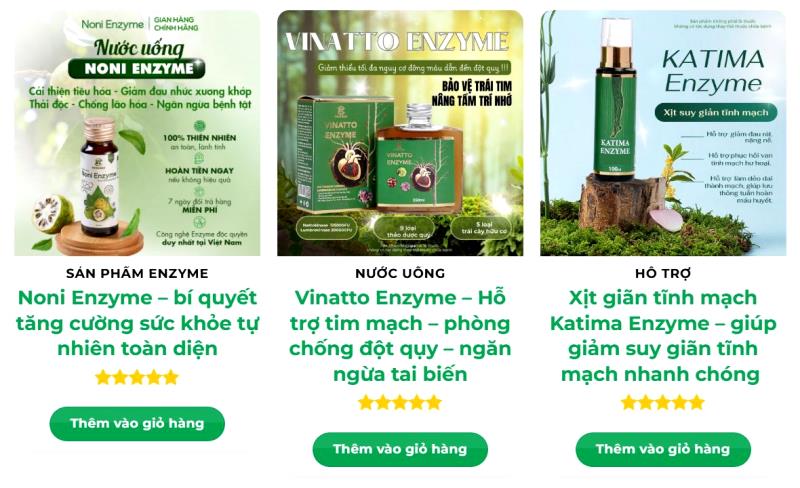
- Noni Enzyme – the secret to promoting comprehensive natural health
- Vinatto Enzyme – Cardiovascular Support – Stroke Prevention – Prevention
- Katima Enzyme – Varicose Vein Spray – helps relieve varicose veins quickly
- Cocolung Enzyme – Soothes coughs, protects the respiratory tract
- Lung Spray – ear, nose and throat spray… blow away the cough – inflammation of sores
- Biolung Back – microbial balance, clean back skin
All products are tested, evaluated for quality, and have full information about enzyme activity. There are clear, safe and effective instructions for use.

References
- National Institute of Diabetes and Digestive and Kidney Diseases – “Your Digestive System & How It Works”
https://www.niddk.nih.gov/health-information/digestive-diseases/digestive-system-how-it-works - Journal of Gastroenterology and Hepatology – “Digestive enzyme supplementation in gastrointestinal disorders”
https://pubmed.ncbi.nlm.nih.gov/23614586/ - Harvard Health – “The gut microbiome and health”
https://www.health.harvard.edu/diseases-and-conditions/the-gut-microbiome-and-health

 VN
VN